Blog: Should we change our approach to influencing?
Does a more interactive approach help engagement with MPs?
- Author
- Victoria Newell
- Published
- 17/08/2026
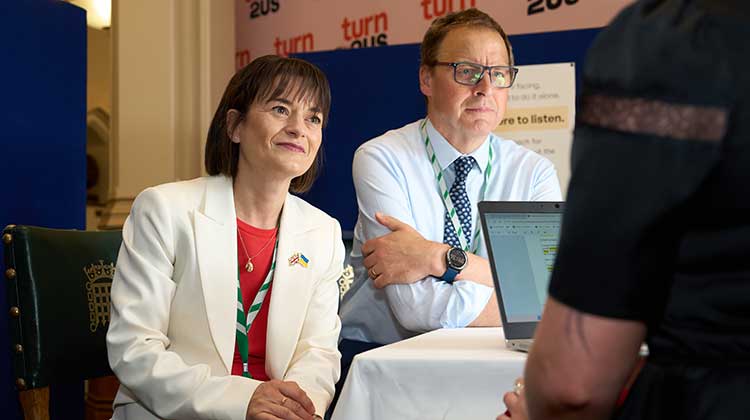
Last month, we tried something completely different. We invited MPs to step inside a Jobcentre experience.
Working with our co-production partners and professional actors with lived experience, we created two immersive interactions: one reflecting the reality many people currently face at Jobcentre appointments, and another showing what a more supportive, dignified experience could look like.
Statistics give MPs one part of the picture. But we wanted them to understand how it feels to use the Jobcentre, and the impact that has on your confidence, wellbeing and ability to find work.
Here is what we learned, and what we would pass on to anyone considering trying something new to help MPs understand the real experiences behind the research and reports.
Why we tried something different
Our ‘Stop the stigma. Fix the system' campaign aims to challenge stigma in the social security system and ensure everyone is treated with dignity and respect. A key part of that is Jobcentres that lead with trust, not suspicion.
Through our work with co-production partners, we heard how Jobcentre interactions left people feeling scrutinised, judged and belittled rather than supported. Our co-production partners suggested an immersive experience, so MPs could sit through those interactions themselves instead of reading or hearing about them.
Reflecting on our previous influencing tactics, the limited engagement we had from traditional parliamentary events left us eager to test if a more interactive approach could create deeper engagement and more meaningful conversations with MPs.
The challenges we faced
Trying something new inevitably brought challenges.
Creating an immersive, thought-provoking and practical experience within a parliamentary setting, without gimmick, required careful balance. Rather than relying on props or elaborate staging, we focused on realistic interactions and authentic storytelling.
In the lead up to and during our event, Westminster was experiencing instability and changing priorities. Working closely with our MP sponsor and drawing on advice from friendly MP staffers, we tailored our outreach to ensure the event remained relevant to the issues they were focused on.
Although disruption in Parliament likely affected attendance, it reinforced the importance of measuring success through the quality of engagement as well as the number of attendees.
What worked well
Despite the challenges, the event exceeded our expectations.
One of the most striking outcomes was the quality of conversations. Rather than being told what to think, MPs were encouraged to draw their own conclusions based on the immersive interactions. And that led to enlightening conversations that would have been unlikely during a traditional policy event.
Plus, nearly all attending MPs recorded content with us, demonstrating a level of buy-in that is often difficult to achieve.
Most importantly, the event showed the value of involving people with lived experience throughout. Co-production partners devised the original idea, helped design the interactions, contributed to invitations and participated on the day. MPs commented on the value of hearing directly from the people that shaped the event, while co-production partners told us how meaningful it was to see their ideas brought to life.
Key lessons
Looking back, a few learnings stand out.
First, decision-makers are keen to engage with new approaches when they are relevant and grounded in real experiences.
Second, it pays to be brave. Trying something different carries risks, but it can create deeper engagement, more memorable conversations and ongoing engagement.
Third, personalisation matters. We encouraged supporters to personalise invitations to their MPs, and while fewer people took part than in some previous actions, we believe the quality of those messages helped drive attendance and engagement.
Finally, lived experience should be built in from the start. The authenticity and impact of the event came directly from the people who helped create it.
Final reflections
In a crowded influencing landscape, it can be difficult to break through. Reports, briefings and networking events remain important tools, but there is real value in creating opportunities for decision-makers to engage with issues in a more human and experiential way.
There are things we would do differently next time. But we're now confident that when lived experience drives the design, and we're willing to experiment with new approaches, we can create conversations that go beyond usual policy discussions and leave a lasting impression.
If you're interested in working on something together, or you're trying out new approaches too, I'd love to hear from you. Email me at victoria.newell@turn2us.org.uk.
Stop the stigma. Fix the system
Most of us will need the benefits system at some point. So, it should treat us all with dignity and respect. Join our campaign to make sure our social security system is there for all of us when we need it.