Turn2us annual impact 2025-2026
- Last reviewed 25 September 2026

Financial review
Care home income
Elizabeth Finn Homes operates as a distinct company with its own management team, working closely with Turn2us, whose board retains decision-making authority over significant matters.
Surplus and rent from the care homes are invested back into the charity, supporting our work with people facing financial insecurity.
In 2025–26, Elizabeth Finn Homes contributed £3.2 million (2025: £3.8 million) in both covenanted surplus and rent to Turn2us. The contribution figure is stated after investing £812,000 (2025: £796,000) in our ongoing programme of maintaining the facilities to ensure excellent care.
The decline in contribution in the 2025–26 financial year was mostly driven by low occupancy early in the financial year. Occupancy improved later in the year, and we expect a higher contribution in 2026-27.
Investment portfolio and policy
The charity recognises three critical groups of assets, which were monitored by the Finance, Investment and Audit Committee quarterly in the 2024–25 financial year:
- An investment property portfolio, consisting of fourteen assets, mostly donated to the charity, plus tangible fixed assets, including the freehold of seven care homes, with an additional home held on a long lease at a ground rent of £15,000 per year
- Investments managed on behalf of the charity by two professional fund managers operating on a discretionary basis
- Cash used for working capital purposes and managed in-house.
The charity updates its investment policy annually. The last review was completed in March 2026 with no major adjustments to the policy.
The care home assets are reviewed as part of the continuing assessment of performance of the dedicated care home subsidiary, Elizabeth Finn Homes.
Last year, the trustees completed an in-depth analysis of the care home asset with the support of external consultants and decided to retain ownership of the business and invest in it to generate higher returns for the charity.
Investment properties, which do not form part of the care home portfolio, are reviewed regularly by the Finance, Investment and Audit Committee to determine their most appropriate use in maximising return.
The Finance, Investment and Audit Committee monitors the performance of the listed investments using defined criteria.
The overall investment objective, as laid out in the investment policy and based on total return, is Consumer Price Index (CPI) + 4% to create a link between expected investment return and the ability to fund the charity's expenditure on its work.
The trustees have given the investment managers discretionary mandates, based on equity growth benchmarks. The equity asset allocation is counterbalanced by the property portfolio noted above.
Our investment portfolio excludes gambling, tobacco, pornography, and controversial weapons, fossil fuel companies that are not on a genuine pathway to transition in alignment with a 1.5°C global warming scenario, and companies that engage in predatory lending practices.
We also monitor ESG practice of the companies in our portfolio through our investment managers.
For the £42.4 million in funds held by our investment managers (2025: £46.3 million), the combined investment performance for both managers for the year was 7.9%, which was above the budgeted return objectives for the financial year.
The Edinburgh Trust portfolio is ring-fenced by the fund managers, given the size and the specific nature of the activities. Other ongoing restricted funds are co-mingled into the main discretionary portfolio to optimise total returns for each fund over the long term.
Expenditure
Total expenditure was £47 million, an increase of £2.4 million on the previous year.
Spend on charitable activity was essentially flat at £10.7m, while the cost of running our care homes increased by 6.9% (2026: £34.4m; 2025: £32.4m). The central running costs of the charity were flat at £2.2m.
Reserves position and policy
In drawing up our reserves policy, trustees are mindful of the need to balance financial prudence with the importance of delivering impactful front-line work.
Trustees last updated the charity's reserves policy in March 2025 and review it at least every two years.
To enable the charity and care home business to deliver upon its commitments to the people for whom we are here to support and to avoid the risk of interruptions to our programmes and services, our prudent Reserves Policy is to retain a minimum of four months total group expenditure + 15% in free reserves.
The trustees arrived at the policy through a stress test of incoming resources and allowing for market variability, since most of the reserves are held in investment.
The charity has the responsibility for a historical defined benefit pension scheme, which is closed to new joiners. The scheme is governed by a separate board of trustees. The charity must maintain appropriate funding levels to ensure the scheme can meet its liabilities.
The pension trustees are pursuing a full buy-out and wind-up of the scheme. On 1 July, post-balance sheet, a bulk purchase annuity was transacted with insurer Just. Current estimates indicate that the scheme will be in surplus net of fees at the point of full wind-up.
In the 2023-24 financial year, after discussion with our auditor, the Charity's Trustees determined that the prudent approach would be not to recognise the net assets within the accounts.
As of 31 March 2026, total funds were £61.6 million, a decrease of 3.4% from the previous year (2025: £63.8 million). Unrestricted reserves are funds freely available for the use of the charity and therefore exclude restricted reserves and permanent endowment funds.
Furthermore, although unrestricted, the designated funds represent the net book value of tangible property assets, primarily managed by the commercial subsidiary. These funds are therefore not regarded as free reserves available for spending.
On 31 March 2026, the charity held free reserves of £24.2 million, which represents about six months of the group's annual expenditure. The trustees are confident that the reserves level is sufficient for current and proposed levels of activity.
Risk review
The board, which was supported by the Finance, Investment and Audit Committee, has overall responsibility for risk management of the group.
A strategic risk register covering key strategic risks was reviewed by the committee and board. The group's Risk Policy was reviewed in 2025.
We have increased our charitable expenditure over the last few financial years to meet the ambitions of our new strategy and the needs of those facing financial hardship during this particularly challenging time in the UK.
This has been identified as a key long-term financial risk of the charity, as we work towards a more sustainable financial model. Volatility in the global stock markets is also a concern. The charity, however, has strong reserves and the ability to pull back on spending.
In looking at the key financial risks and in view of financial projections over the next 18 months, trustees are satisfied that the charity is in a stable financial position.
The key operational risk for the charity is the threat of generative AI to our digital tools. For the care home subsidiary, the main operational risks are the ability to recruit sufficient care home staff, occupancy, and safeguarding.
Trustees ensure that there are appropriate measures in place to mitigate the impact and likelihood of risks occurring.
Where possible, insurance protection is taken out against risks materialising and, where insurance is not available, frequent monitoring and surveillance of the mitigation measures takes place.
Financial activities of the charity:
Incoming resources 2025–26:
- Legacies: £165,000 (7%)
- Donations and Grants: £2,920,000 (21%)
- Trading activities: £865,000 (6%)
- Rental Income from Elizabeth Finn Homes: £3,905,000 (47%)
- Net profit donation from Elizabeth Finn Homes: £97,000 (8%)
- Investment income: £784,000 (11%)
- £8.7 million received: Contributions from Elizabeth Finn Homes were made possible by the generosity of previous supporters who financed or donated the care homes to the charity.
Outgoing resources 2025–26:
- Grants given: £3,360,000 (23%)
- Support and information services: £4,589,000 (32%)
- Grant support, partnerships and place-based programmes: £3,362,000 (27%)
- Income generation: £1,481,000 (11%)
- Investment management: £248,000 (2%)
- Property maintenance of Elizabeth Finn Homes: £812,000 (6%)
- £13.8 million spent: Charitable activity accounts for 82% of the total financial activity of the charity or 82p for every £1 spent.
Fundraising compliance
Turn2us is registered with the Fundraising Regulator and adheres to the Code of Fundraising Practice.
We employ a central team of professional fundraisers and commission the services of specialist consultants and external agencies for the purpose of raising money for the charity via contributions from members of the public, grant making institutions, gifts in wills, companies and commercial trading.
Where third parties support our fundraising activities, we undertake appropriate due diligence and require them to operate in line with relevant legal and regulatory requirements, including the Code of Fundraising Practice.
For the 12 months to 31 March 2026, we received no formal complaints in relation to our fundraising activities.
Via written policies and training, our staff received guidance regarding Data Protection (including GDPR) and regarding communications with at-risk members of the public.
We continue to monitor developments in data protection and direct marketing regulation, including the introduction of the soft opt-in for charities in February 2026, and will review our processes and systems to ensure alignment where appropriate.
Legal, structure and governance
The charity was founded by Elizabeth and Constance Finn in 1897 as the ‘Distressed Gentlefolk's Aid Association' and incorporated under that name on 19 January 1953 as a charitable company limited by guarantee.
The charity changed its name to Elizabeth Finn Trust in 1999 and to Elizabeth Finn Care in 2005. The operating name of Turn2us was adopted in 2015 and was legally changed in 2026.
The charity is governed by articles of association (last amended 23 July 2019). The objects are to relieve and assist residents or nationals of the United Kingdom or the Republic of Ireland from a professional or similar background suffering from old age, infirmity, disablement or financial need or are otherwise in conditions of need, hardship or distress.
Role of the Board of Trustees
The Board of Trustees is ultimately responsible for promoting the long-term success of Turn2us. Trustees lead and provide direction in setting strategy and overseeing its implementation.
They are also responsible for oversight of the charity's systems of governance, internal control and risk management.
The Trustees have acted in accordance with their legal duties which include their duty to act in the way they consider would most likely promote the success of the charity and their duties under the Companies Act.
Considerations under section 172 of the Companies Act 2006 are embedded in decision-making at board level and throughout Turn2us.
Specific key decisions and matters have been reserved for the Board.
These include overall management of the charity, ensuring compliance with the charity's objects and relevant legislation, the strategic aims and objectives of the charity, approval of annual budgets and business plans, approval of the scheme of delegation to the Board's sub-committees and their terms of reference and appointment of trustees and directors of subsidiary companies.
At each meeting of the Board, trustees receive reports on key aspects of the charity's operations, including financial performance and resilience, material activities, regulation, communications and programmes monitoring.
When making decisions, the Board considers the insights obtained through relevant committees, staff and stakeholder engagement activities as well as the need to maintain a reputation for high standards of conduct and the long-term consequences of its decisions.
Appointment, effectiveness and attendance of trustees
The Articles of Association provide that the Board shall consist of between seven and 15 individuals, all of whom must be members of the charity. At 31 March 2026, the charity's Board comprised of 14 trustees.
Board members are trustees of the charity and directors of the company limited by guarantee for the purposes of company law. Membership is only open to trustees.
Members of the charity guarantee to contribute up to £1 to the assets of the charity in the event of winding up.
The balance of the Board's diversity, skills and experience is kept under constant review and new trustees are appointed by the existing Board on recommendation of the People, Culture and Governance Committee. Recruitment is based on objective selection criteria after a transparent and competitive process.
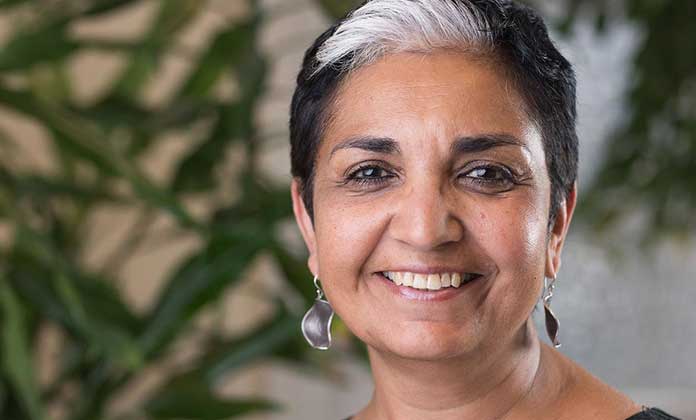
In May 2025, we welcomed a new Chair to the Board, Arvinda Gohil OBE, who formally took up the role on 27 May 2025 following the end of Carrie Stokes' term as Chair and her departure from the Board on 9 May 2025.
Arvinda was appointed following a robust recruitment exercise including wide advertising and an application procedure which anonymised candidates and reduced the potential for unconscious bias in recruitment.
Arvinda is an experienced leader who brings significant experience of working in the charity, social enterprise, housing and homelessness sectors.
Our trustees are volunteers, and are not remunerated for their work, but may claim reasonable expenses incurred by attending meetings or carrying out other duties.
Public benefit statement
The charity's trustees have had due regard to the Charity Commission and OSCR guidance in relation to delivering public benefit.
The work of Turn2us is specifically aimed at the prevention or relief of poverty and all the charity's resources are focused on achieving its charitable purposes.
Staff
We have a paid workforce of 678 full-time equivalent staff (year ending March 2025: 657) based across the UK.
Of this workforce, 580 are employed in our care home business, Elizabeth Finn Homes, while 98 work directly for Turn2us. In the year ending March 2026, we filled 37 roles. This includes internal members of staff moving to new roles.
Learning and development remains a key priority, with a continued focus on building capability and supporting staff to thrive.
We have continued to rollout in-house safeguarding and people leader training, alongside a programme of learning sessions on EDIB, stress awareness and AI.
Targeted development for Heads of Department and the Organisational Leadership Team, alongside bespoke coaching and mentoring, is strengthening leadership and supporting individual growth. A skills audit is planned for 2026 to inform our future approach.
We will shortly launch the Continuous Improvement Cycle, enhancing our appraisal process in response to colleague feedback. This introduces more regular, meaningful conversations, clearer expectations, and earlier, proactive support for performance and development.
Strengthening organisational culture has also been a central focus. Through our partnership with Ten Years' Time, we are advancing our anti-racist commitment, centring lived experiences, deepening understanding of progression and development, and co-designing practical actions to embed inclusive, equitable practices across the organisation.
A key focus during the year has been strengthening organisational culture and leadership capability. A culture diagnostic identified significant strengths in staff commitment to Turn2us' mission, values and social purpose, alongside high levels of engagement with the organisation's vision.
The diagnostic also highlighted opportunities for further growth, particularly in leadership development, accountability, collaboration and strengthening management practice.
In response, Turn2us has increased its development offer for Heads and the Organisational Leadership Team (OLT), including programmes focused on accountability, conflict management, leadership styles, strategic EDIB and collaborative working.
Remuneration policy
Our remuneration policy continues to provide a clear and transparent framework for salary decision-making, ensuring fairness and consistency across the organisation.
Pay is reviewed annually by Trustees, taking into account cost-of-living pressures and the need to recruit and retain skilled colleagues.
In April 2025, eligible employees received a 3.3% cost-of-living increase. This was followed by a £1,200 salary uplift in October 2025, recognising the value of colleagues' skills, contributions, and increased experience in role.
We continue to apply transparent pay bandings and objective job levelling criteria, alongside anonymised recruitment through Applied to reduce bias.
While not legally required, we publish annual ethnicity and gender pay gap reports as part of our commitment to equity and transparency.
As of April 2025, our mean ethnicity pay gap was 1.99%, a significant improvement on the previous year and the lowest recorded since 2021. Our mean gender pay gap was 0.37%, the lowest since reporting began in 2019.
Throughout the year, we have also continued to update People and Culture policies to reflect current practice, employment law, and our organisational values.
This included launching a hybrid working policy in July 2025, alongside guidance on working from abroad, supporting flexibility while maintaining collaboration and performance.
Health and safety continues to be effectively managed through the Atlas Citation platform, supporting compliance and robust organisational oversight.
Equality commitment
Turn2us remains committed to providing equitable opportunities and treatment for all employees, regardless of sex, race, religion or belief, age, marriage or civil partnership, pregnancy or maternity, sexual orientation, gender reassignment, or disability.
Disability inclusion continues to be central to our EDIB commitments, ensuring colleagues with disabilities have equal access to recruitment, training, promotion and career development, with appropriate adjustments and support provided.
EDIB Strategy launch
A key milestone during the year was the launch of Turn2us's Equity, Diversity, Inclusion and Belonging (EDIB) Strategy, providing a clear framework for advancing equality, tackling systemic barriers and embedding inclusive practice across the organisation.
The strategy builds on existing work and sets out a longer-term commitment to creating an environment where all colleagues feel valued, respected and able to thrive.
Policy for the employment of Disabled people
At Turn2us and Elizabeth Finn Homes we fully embrace as part of our values, beliefs and working practices, that Disabled people will have equal opportunities with recruitment, training, promotion and career development.
We will ensure that Disabled people in our employment are, when necessary, offered specialist knowledge, support and advice to assist them in their working lives.
Disability inclusion aligns closely to our commitment to equity, diversity, inclusion and belonging, which is an essential part of our fabric and business strategy.
We are dedicated to ensuring we create an environment in which all employees are valued and respected.
Statement of Trustees' responsibilities
The Trustees are also Directors of Turn2us. For the purposes of company law, the Trustees are responsible for preparing the Trustees' Annual Report and the Financial Statements in accordance with applicable law and United Kingdom Accounting Standards (United Kingdom Generally Accepted Accounting Practice).
Company law requires the Trustees to prepare financial statements for each financial year.
These statements give a true and fair view of the state of affairs of the charitable company. They provide details of incoming resources and the application of resources, including the income and expenditure of the charitable company for that period.
In preparing these financial statements, the Trustees are required to:
- select suitable accounting policies and then apply them consistently
- observe the methods and principles in the Charities Statement of Recommended Practice
- make judgements and estimates that are reasonable and prudent
- state whether applicable UK Accounting Standards and statements of recommended practice have been followed, subject to any material departures disclosed and explained in the financial statements
- prepare the financial statements on the going concern basis unless it is inappropriate to presume that the charity will continue in operation.
The Trustees are responsible for keeping adequate accounting records that disclose with reasonable accuracy at any time the financial position of the charitable company and enable them to ensure that the financial statements comply with the Companies Act 2006, the Charities and Trustee Investment (Scotland) Act 2005 and the Charities Accounts (Scotland) Regulations 2006 (as amended).
They are also responsible for safeguarding the assets of the charitable company and the group and hence for taking reasonable steps for the prevention and detection of fraud and other irregularities.
In so far as the Trustees are aware:
- There is no relevant audit information of which the charitable company's auditor is unaware
- The Trustees have taken all steps that they ought to have taken to make themselves aware of any relevant audit information and to establish that the auditor is aware of that information.
The Trustees are responsible for the maintenance and integrity of the corporate and financial information included on the charitable company's website.
Legislation in the United Kingdom governing the preparation and dissemination of financial statements may differ from legislation in other jurisdictions.
The Trustees' annual report, which includes the strategic report, was approved by the Trustees on 1 October 2026, subject to Board approval and signed on their behalf by:
Name: Arvinda Gohil OBE
Title: Chair
Date: 1 October 2026
Download our full annual impact 2025-2026 report
Tell us the problem
*Required
Thank you
Thank you for your feedback.